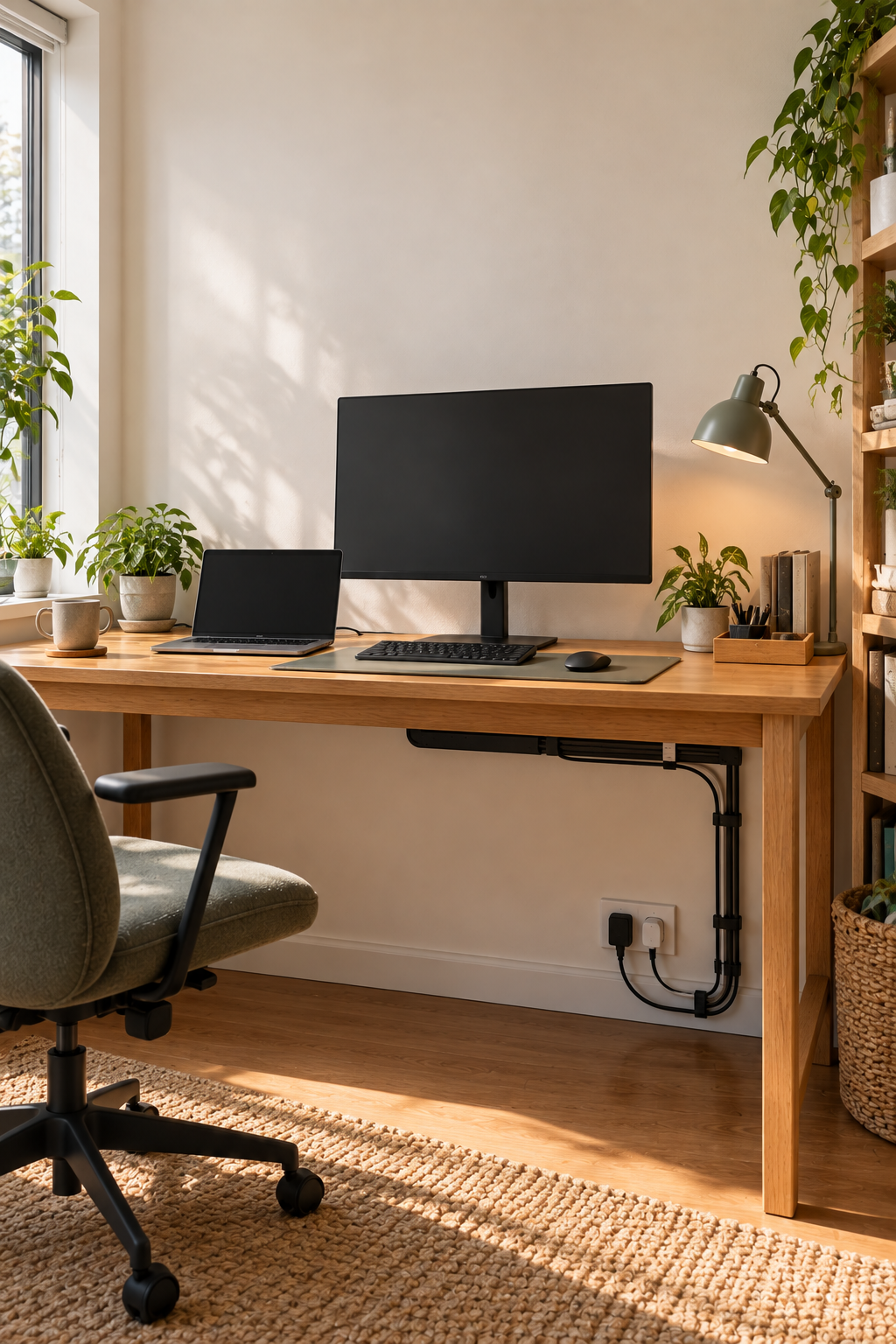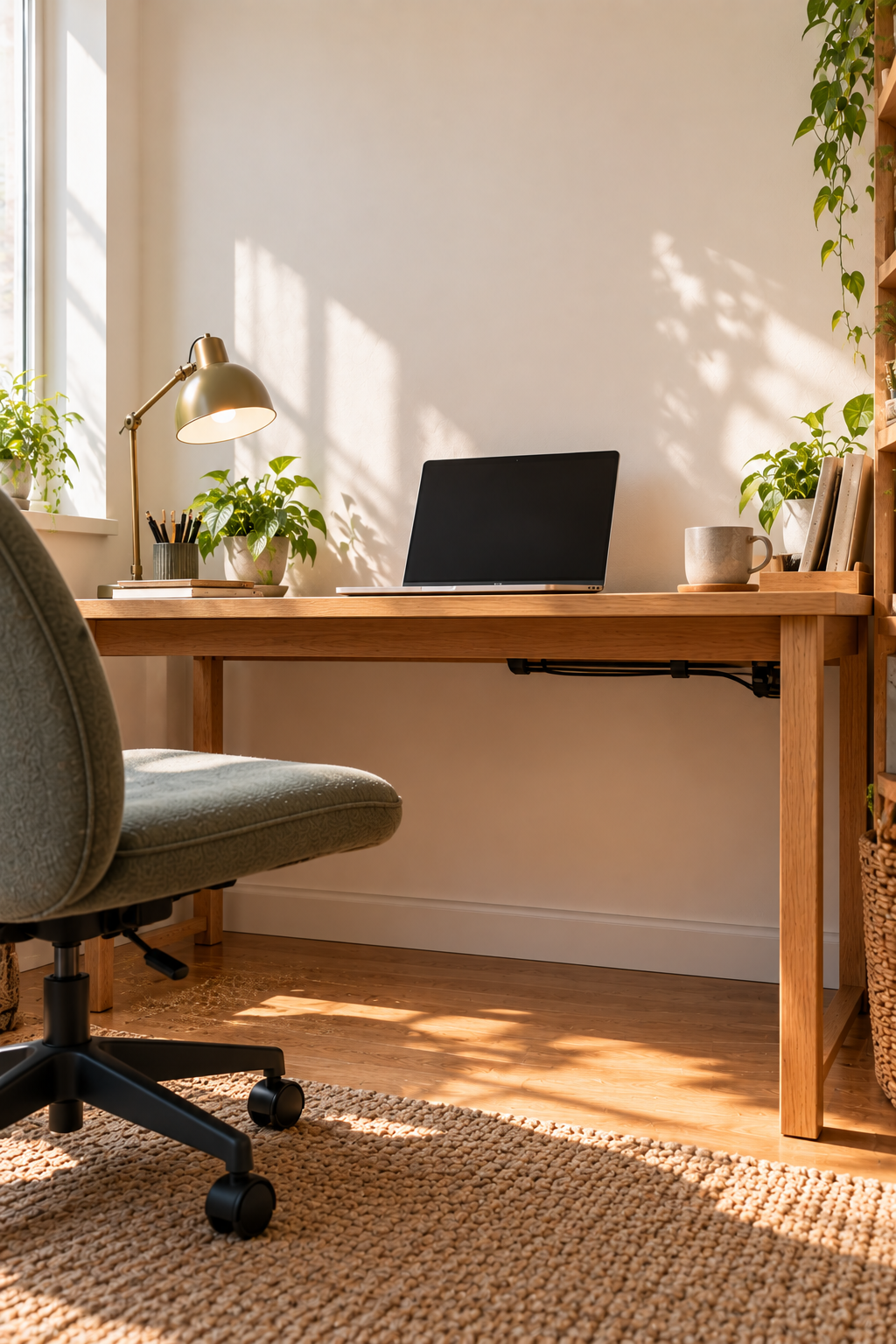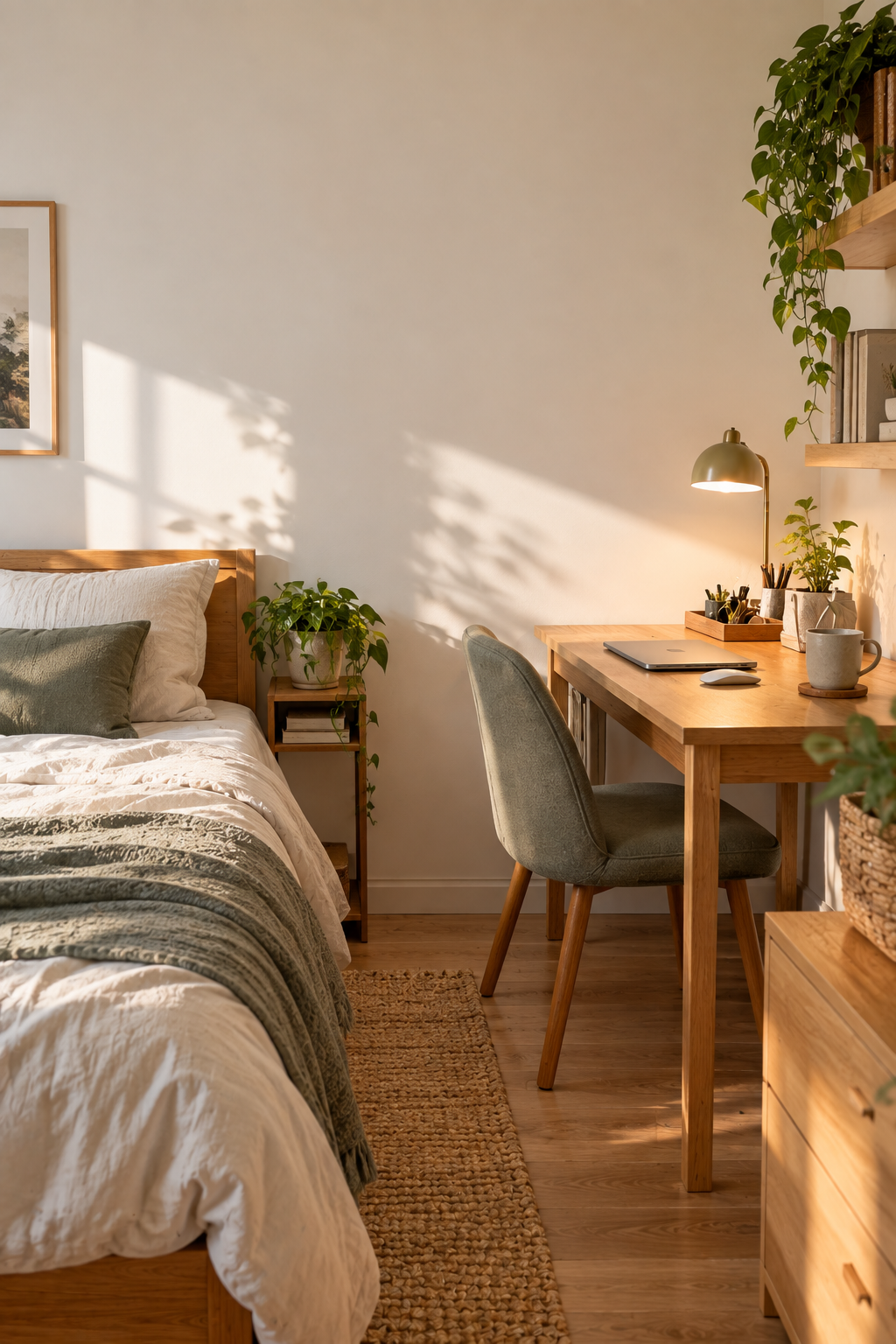
A bedroom office asks one room to signal two opposite things: focus and rest. When the desk stays visually active at night, unfinished work follows you into bed. The most effective boundary is usually not a wall. It is a repeatable combination of direction, light, storage, and a short closing ritual.
- Turn the chair or screen away from the bed when the room allows it.
- Give work objects one closed destination at the end of the day.
- Use different lighting for work hours and evening rest.
Start with sight lines
Stand at the bedroom door and then sit on the bed. Notice whether the brightest or busiest part of the desk dominates both views. If possible, place the screen so its back or side faces the bed. Even a quarter turn can make work less visually demanding after hours.
Build a boundary with orientation
A desk perpendicular to the bed often creates a clearer zone than one running along the same wall. In very small rooms, keep the furniture where it fits and change the orientation of the chair instead. Tucking the chair fully under the desk becomes a simple physical signal that the workday is closed.
Separate the light cues
Use focused task lighting while working and switch it off completely when finished. In the evening, rely on a warmer bedside or room light. The contrast matters more than decorative lighting. One room can feel different when the source, direction, and intensity of light change.
Create a shutdown container
Choose one drawer, lidded box, or cabinet section for the objects that make work feel unfinished: notes, adapters, a mouse, and the current project. A five-minute sweep into a defined container is easier to maintain than a complex organizing system. The surface should look closed, not perfectly styled.
Control sound and notifications
The boundary also needs to exist on your devices. Silence work notifications, close the laptop, and remove it from the bed. If the computer must stay on the desk, cover the indicator lights only in a safe way that does not block ventilation. Keep the phone charger away from the pillow when possible.
Use a two-minute closing ritual
End with the same small sequence: save work, write tomorrow's first task, clear the work rectangle, switch off the task light, and tuck in the chair. Repetition trains the room to feel different even when its floor plan cannot change.
Tonight, choose one work light and one storage destination. Close the desk using the same five steps for three evenings before buying a divider or new furniture.