
Small desk planning
7 Small-Desk Layout Rules That Protect Your Work Surface
A practical way to place a desk, screen, light, and daily tools when every inch of surface area matters.
Read the guide →Start with the problem that is making your workspace harder to use. Each guide offers a plan you can test before buying more things.
A practical way to place a desk, screen, light, and daily tools when every inch of surface area matters.
Read the guide →
Create a visible boundary between your desk and bed without renovating or adding bulky furniture.
Read the guide →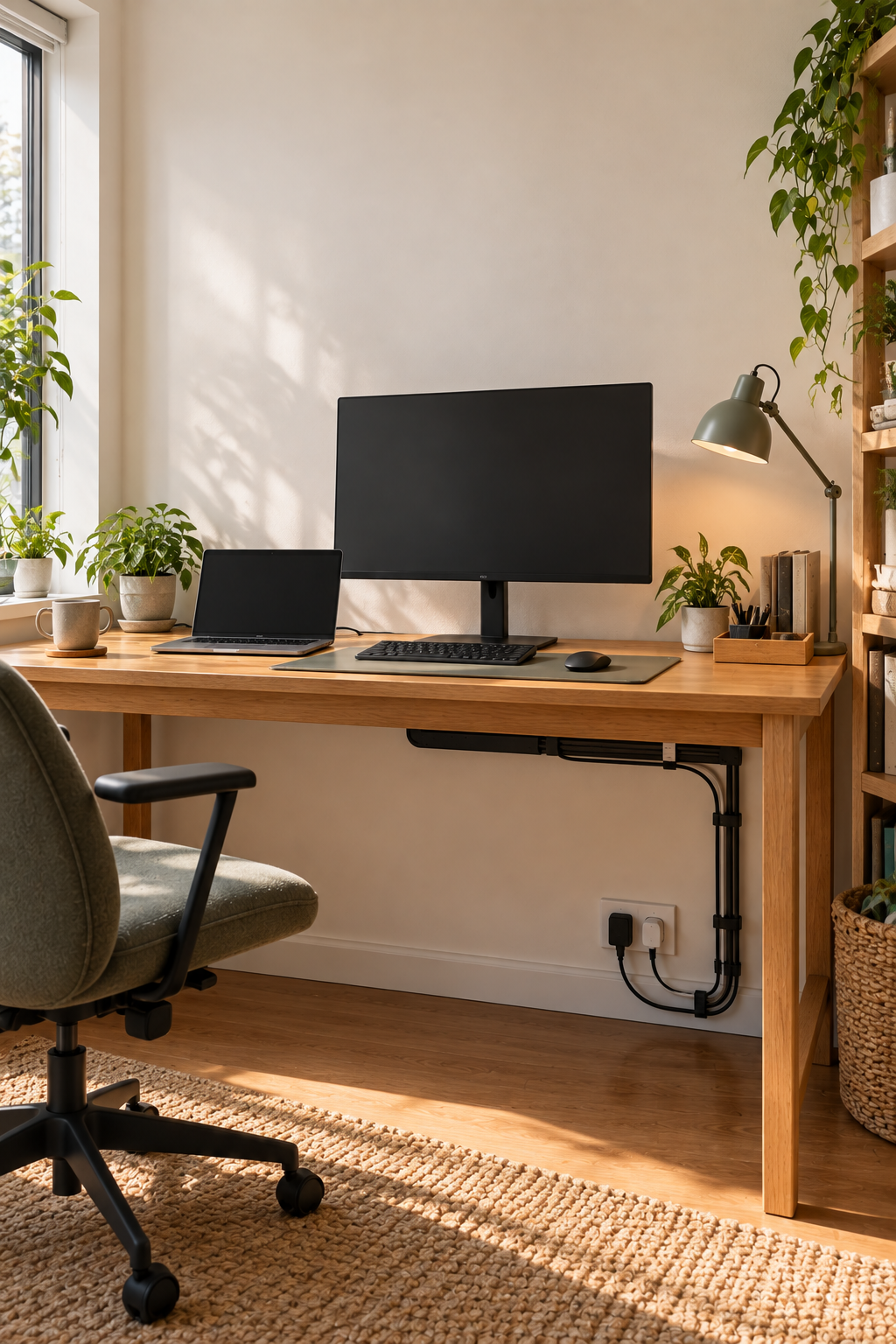
Route power and data cables in layers so a tidy desk stays easy to change and repair.
Read the guide →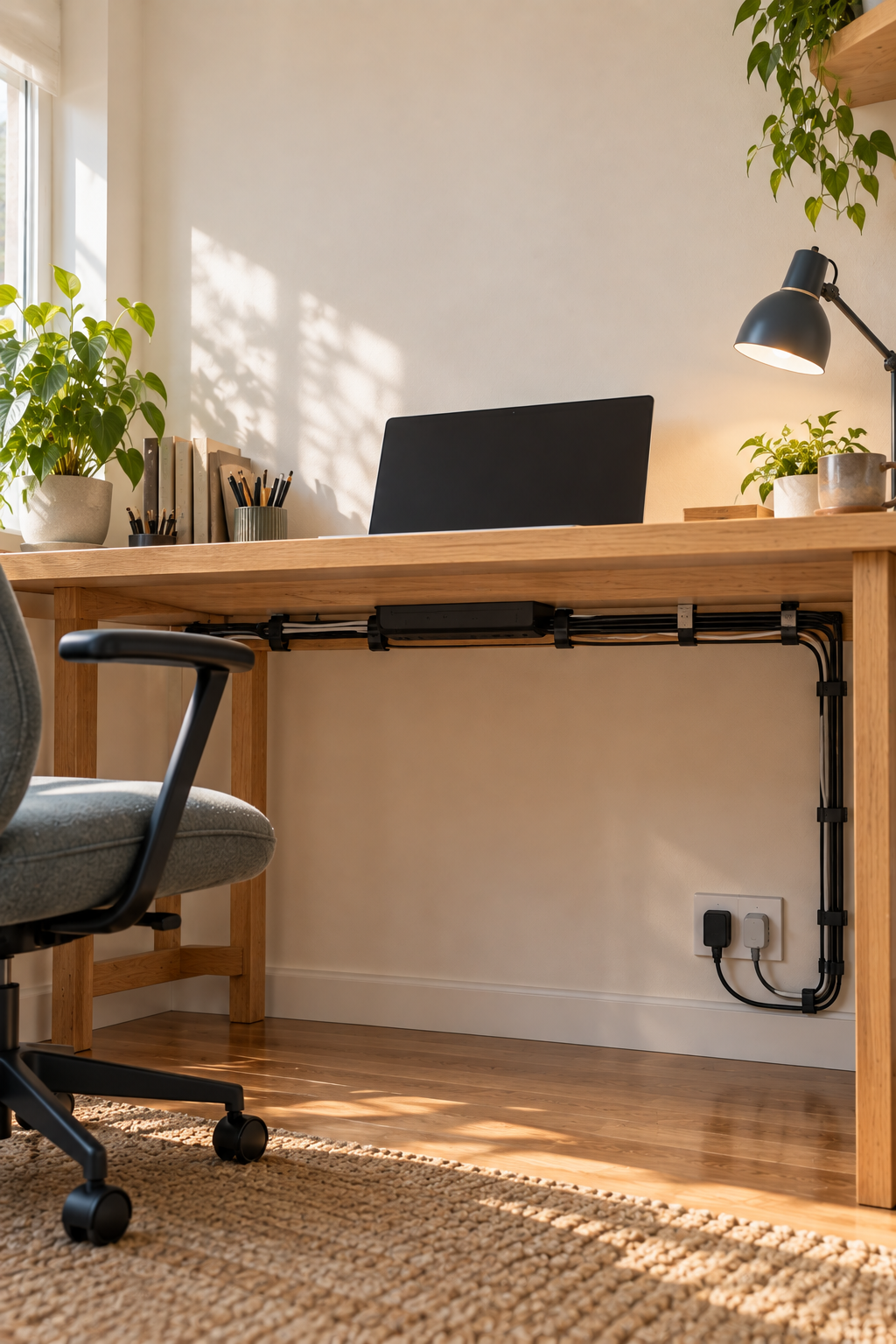
Use three accessible zones to keep cords out of sight while preserving safe access to plugs and adapters.
Read the guide →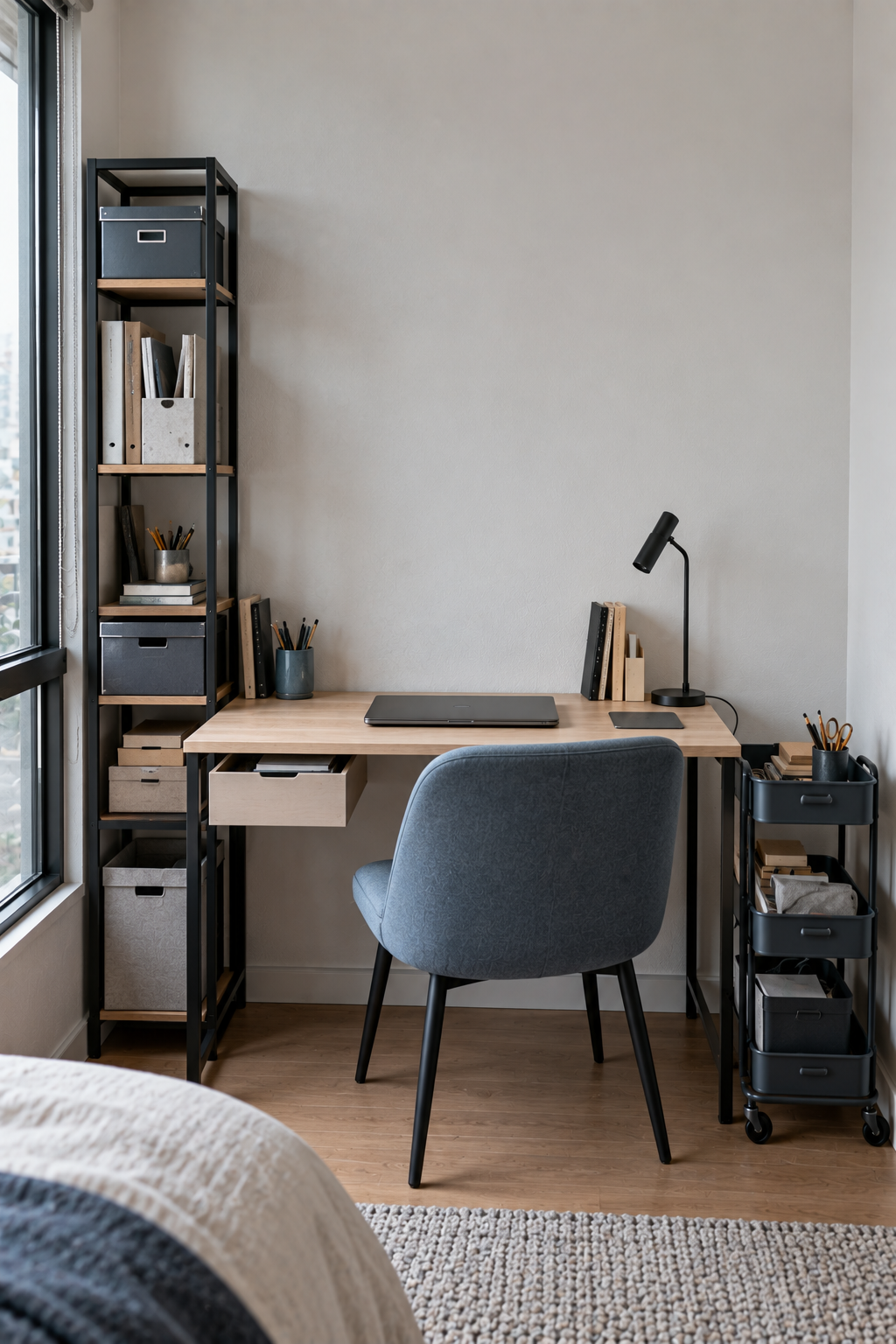
Decide whether an item should go up, down, or sideways before adding another organizer to the desktop.
Read the guide →
Plan an under-desk zone around knees, feet, chair movement, and safe access—not just empty-looking space.
Read the guide →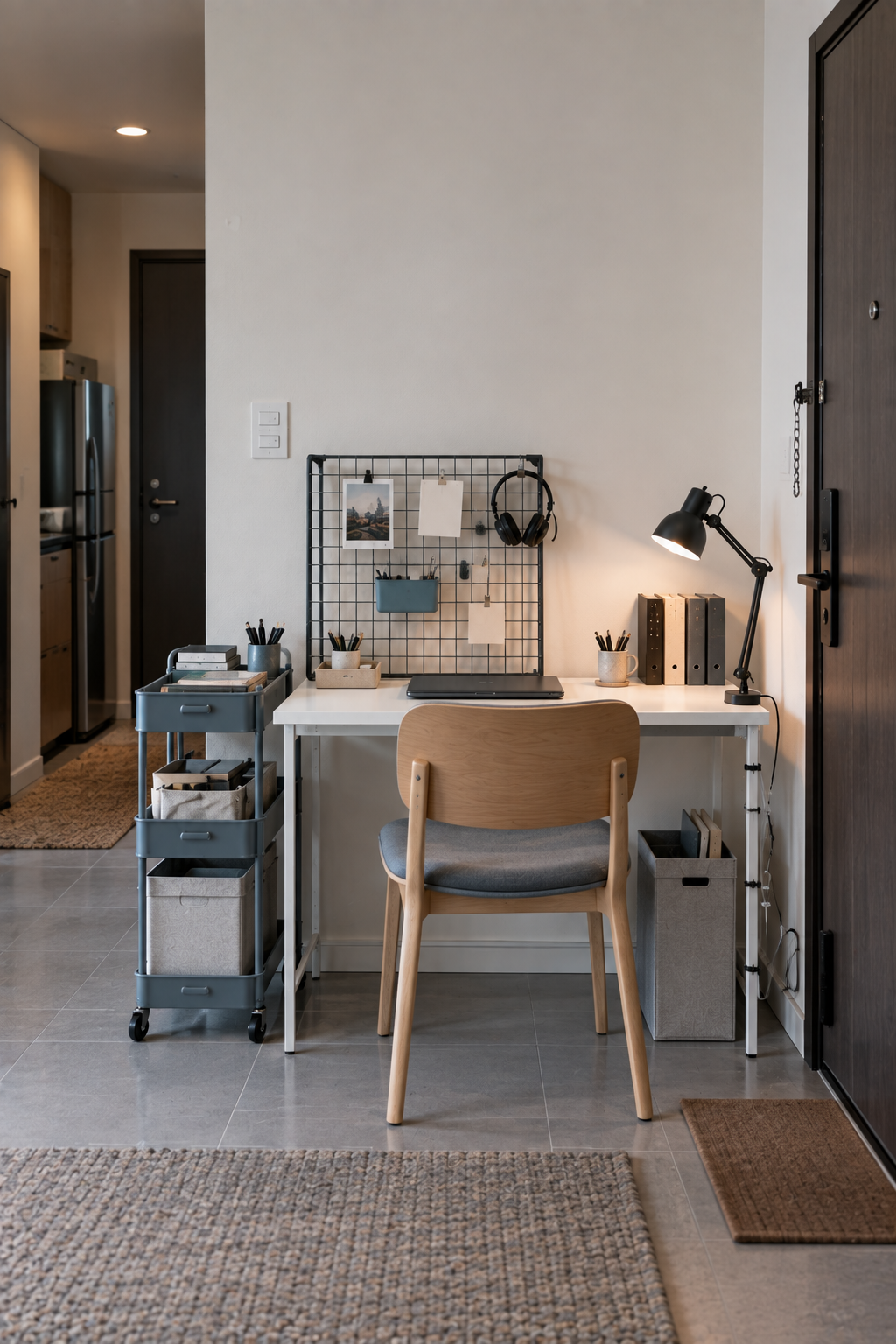
Build useful vertical storage and cable control with reversible choices that respect walls, furniture, and lease rules.
Read the guide →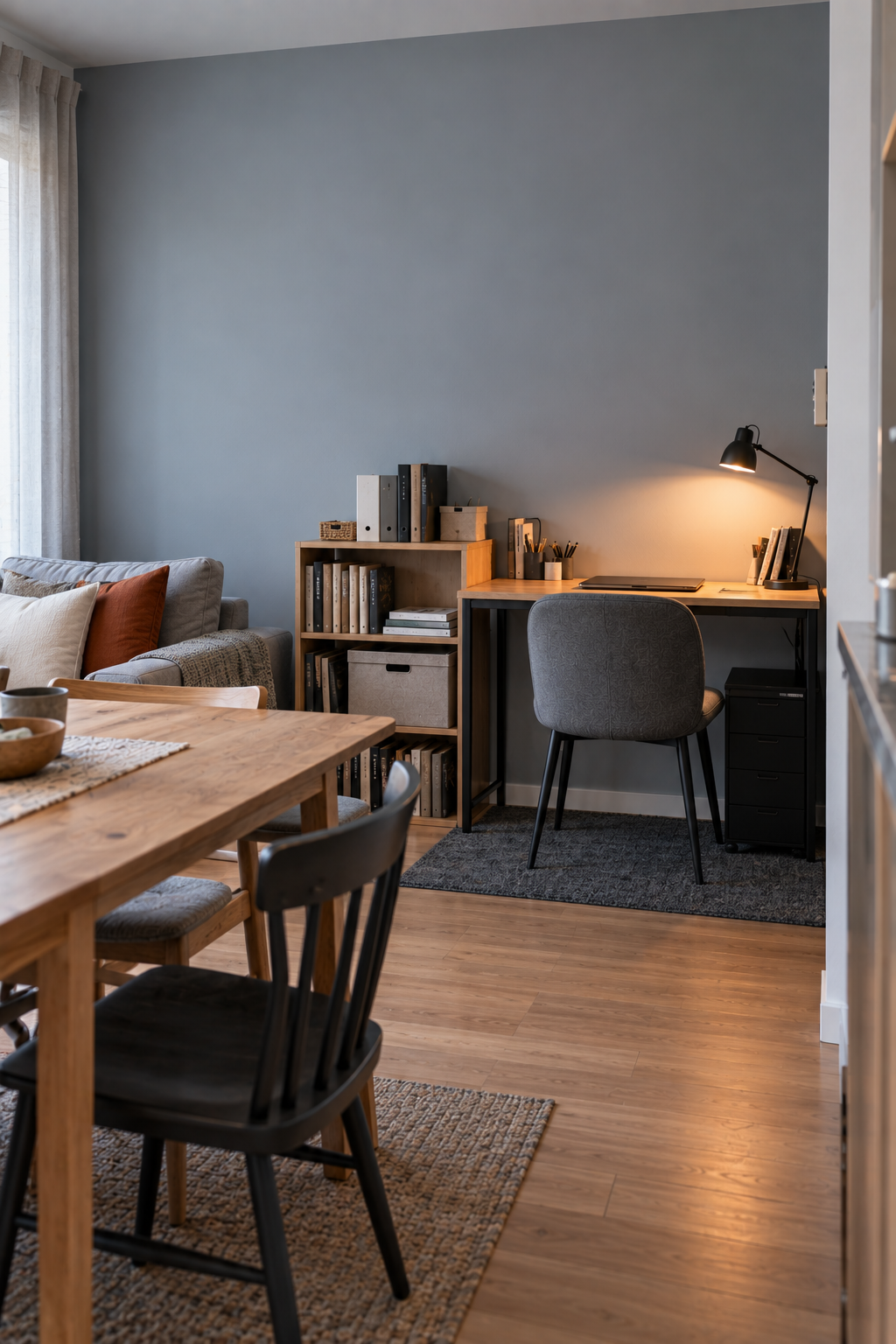
Reduce visual and physical spillover when your workspace lives in a bedroom, living room, or dining area.
Read the guide →
Reduce visual noise with access rules, hidden inventory, and a short reset instead of an all-or-nothing declutter.
Read the guide →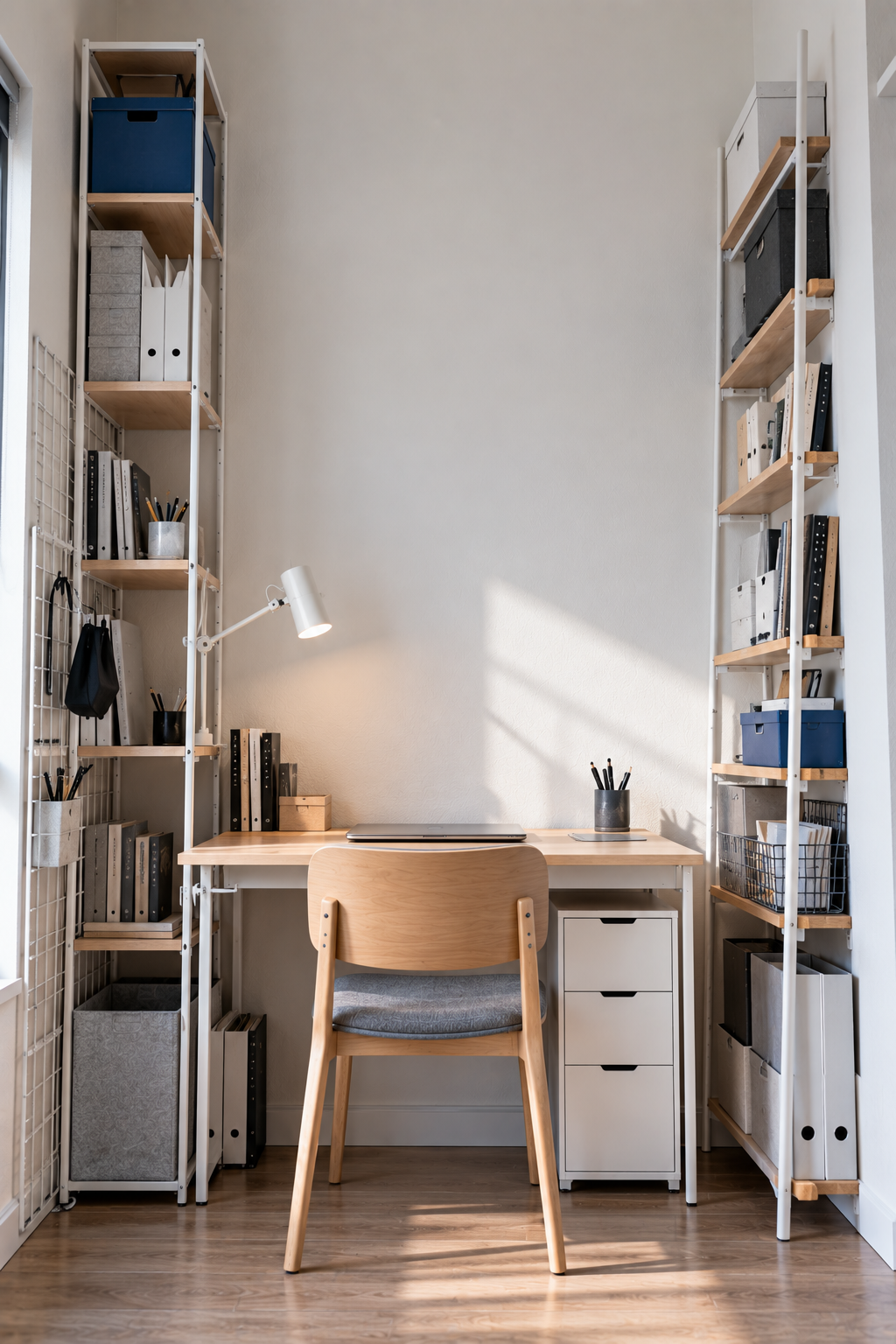
Use height without making the room feel top-heavy, unsafe, or difficult to maintain.
Read the guide →