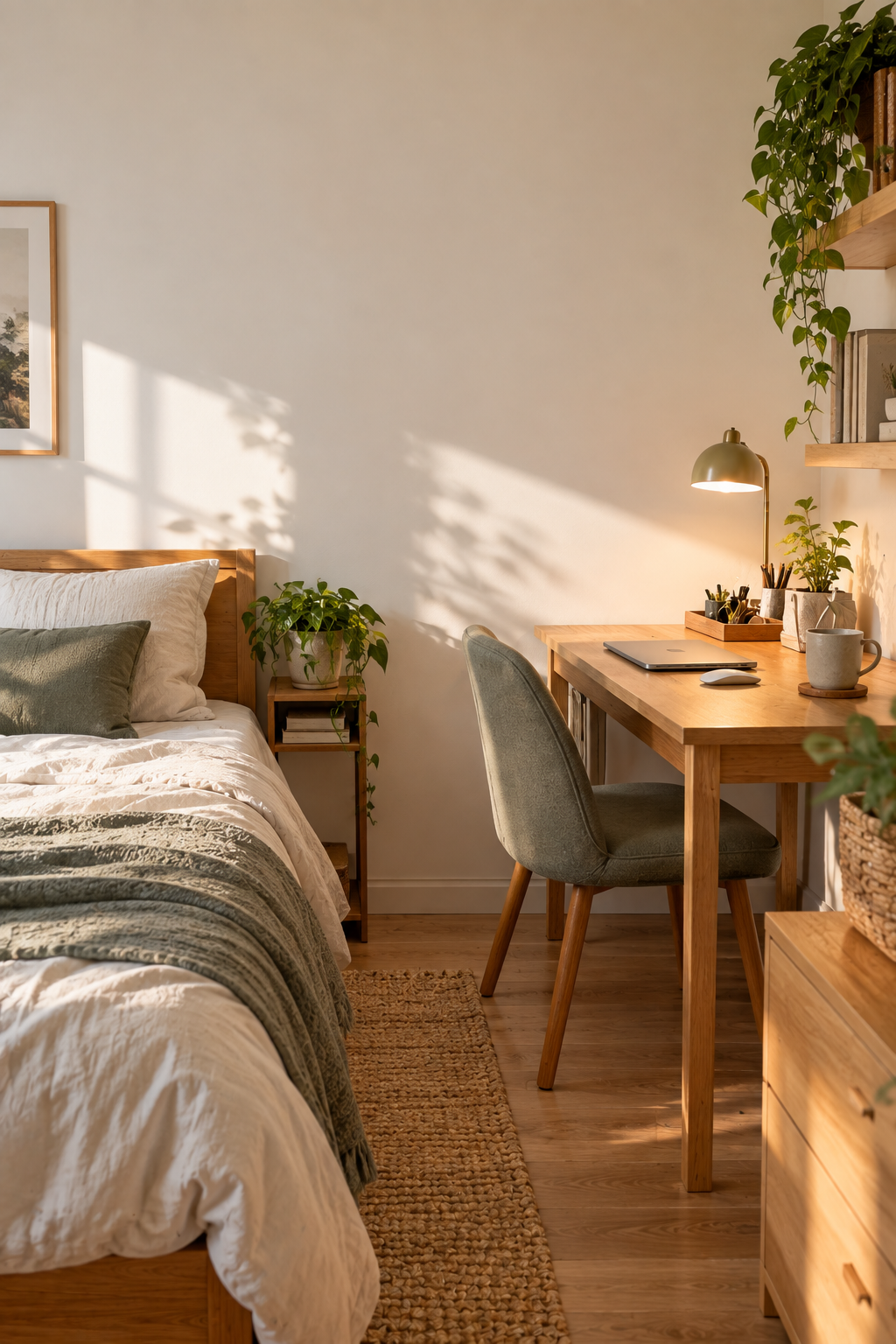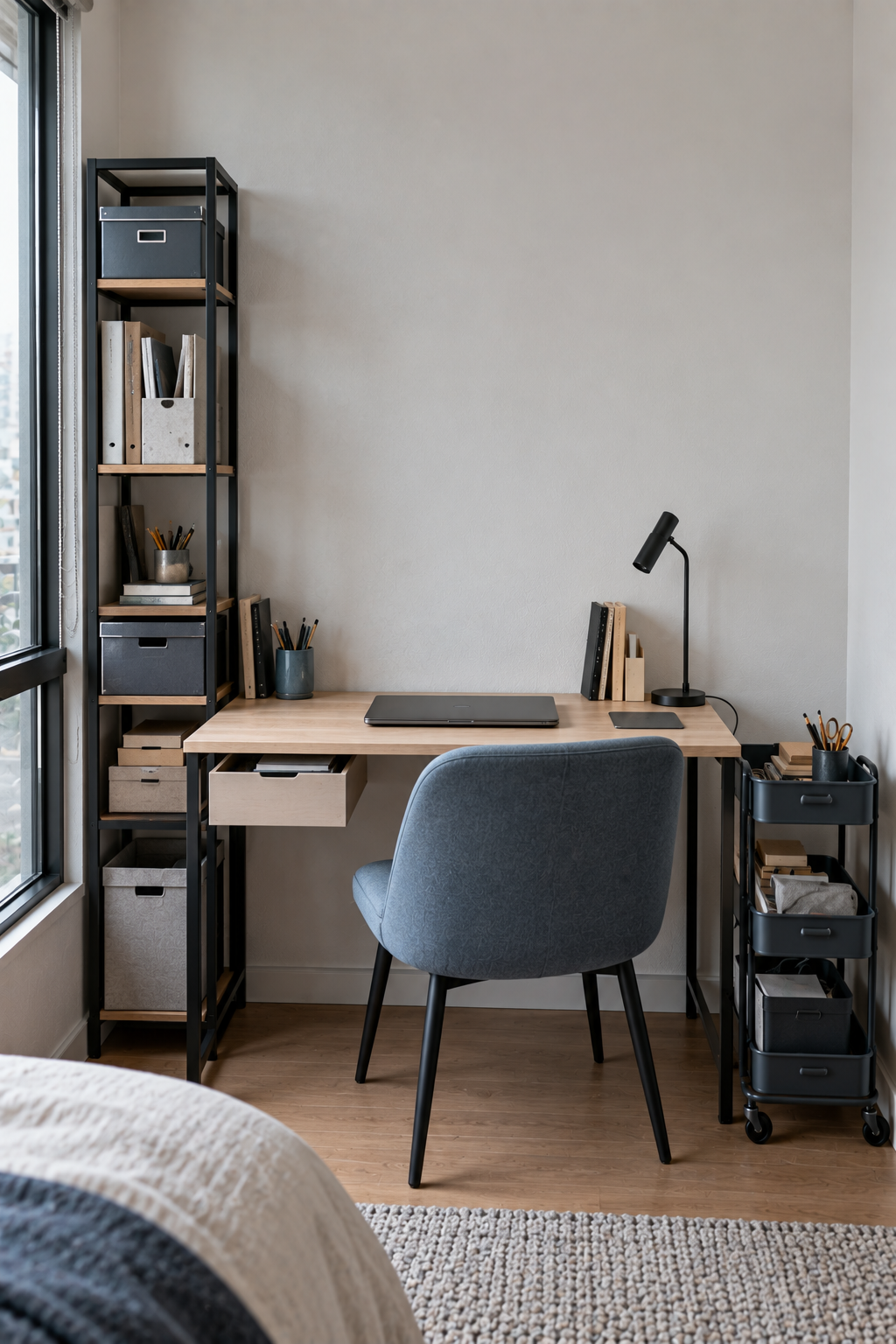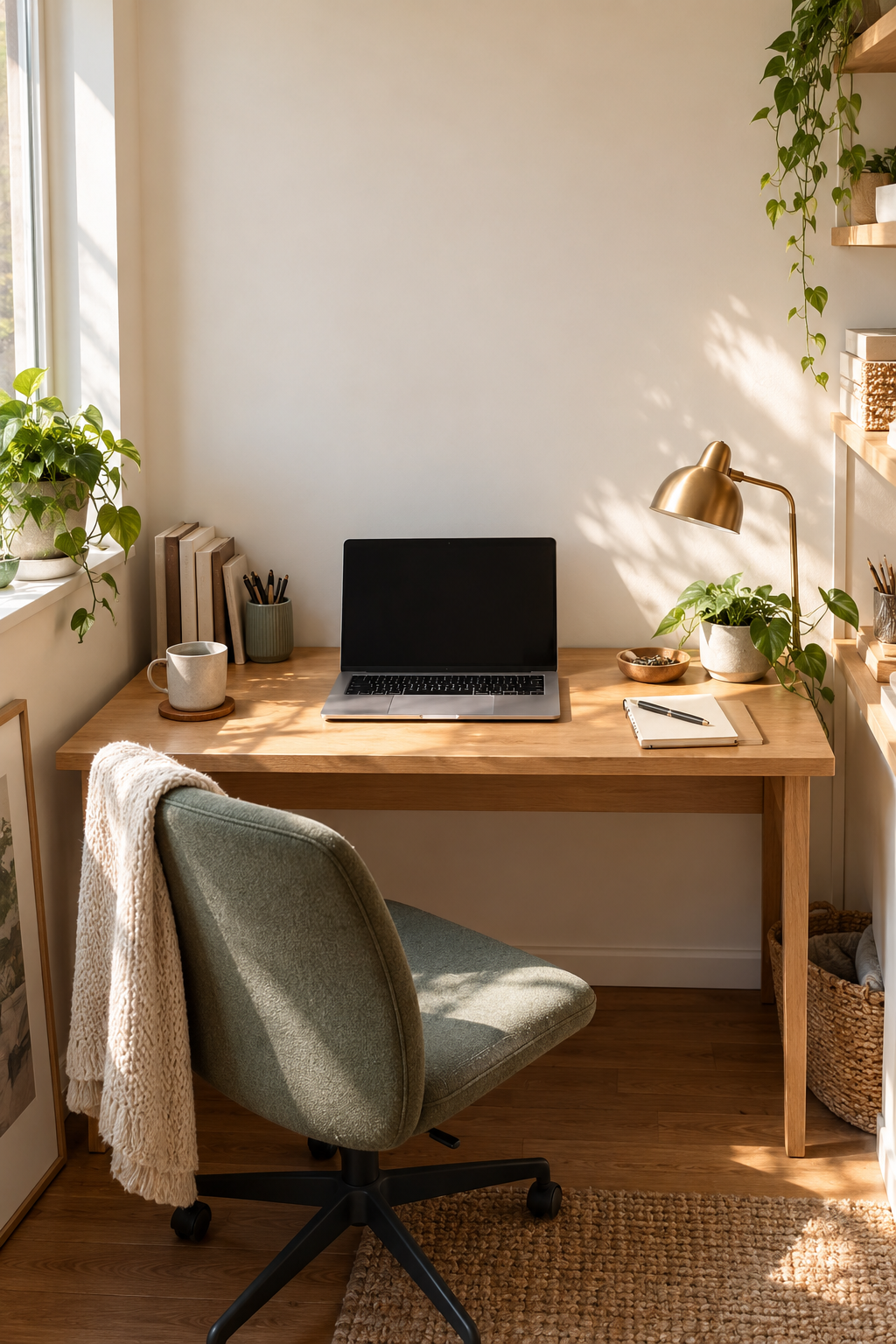
A small desk usually feels cramped for one of two reasons: too many jobs are competing for the same patch of surface, or the objects you use most are sitting in the wrong places. The solution is not to buy a collection of miniature organizers. Start by giving the desk a clear working zone, then make everything else support it.
- Keep one uninterrupted rectangle for your hands, keyboard, and current task.
- Place the largest fixed item first; fit accessories around it, not the reverse.
- Move occasional tools above, below, or beside the desk instead of shrinking the work zone.
1. Define the work rectangle
Sit down and trace the area your forearms naturally reach without leaning. That is the desk's most valuable space. Keep it clear enough for the task you do most often: typing, writing, drawing, or switching between a laptop and notebook. A useful test is whether you can begin work without moving three other objects first.
2. Place the visual anchor
For most setups, the screen or laptop is the anchor. Center it with your seated position rather than the furniture. If you regularly use a second screen, decide which one holds your main task and place that directly ahead. A slightly asymmetrical desk can still feel balanced when your body, chair, and primary screen line up.
3. Keep one landing strip
Choose a narrow edge of the desk for items that arrive and leave: a phone, mug, keys, or the notebook for today's work. Limiting these objects to one strip prevents them from drifting into the keyboard zone. If the strip becomes full, remove something before adding another item.
4. Use depth before width
Shallow desks benefit from a monitor arm, laptop stand, or raised shelf because those tools return depth to the surface. Measure the desk and the full footprint first. A stand that is too deep can consume more room than it creates. The goal is not height for its own sake; it is a clear front half of the desk.
5. Store by frequency
Daily items belong within one easy reach. Weekly items can live in a drawer, wall pocket, or nearby cart. Rarely used supplies should leave the desk completely. This simple frequency rule is more reliable than sorting by category because it follows how you actually work.
6. Leave a reset gap
Reserve a few empty inches at one corner or along the back edge. Empty space makes it easier to set down a notebook, charge a device, or clear the surface at the end of the day. It also gives the eye a resting point, which helps a compact arrangement feel intentional rather than packed.
7. Photograph and adjust
Take one photo from the doorway and another from your seated position. The doorway view reveals visual clutter; the seated view reveals reach problems. Move only one or two things, then work for a day before judging the result. A layout should be tested through use, not perfected in a single styling session.
Clear the desk completely, mark your natural work rectangle with two pieces of removable tape, and return only the screen, input tools, light, and one landing-zone item.