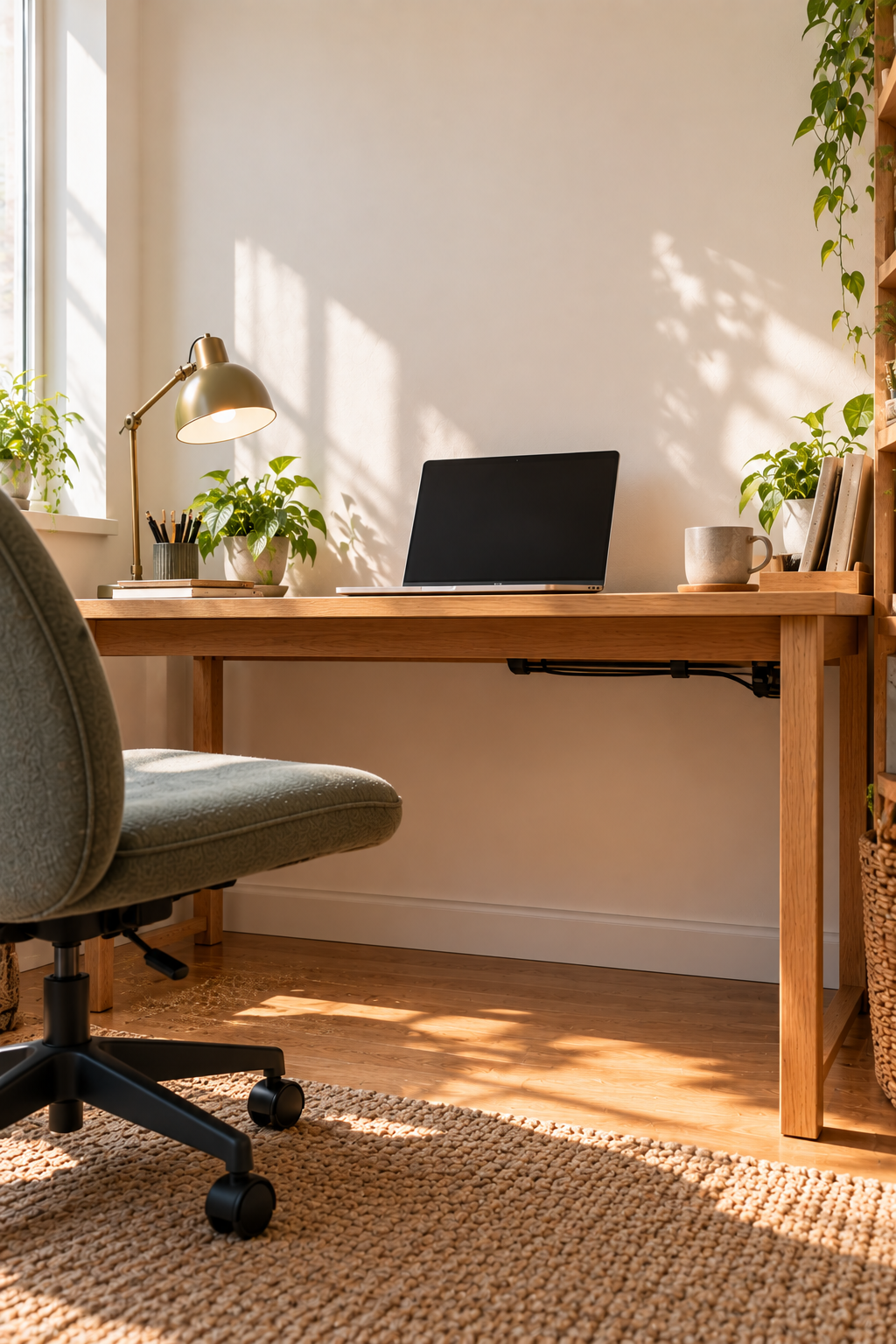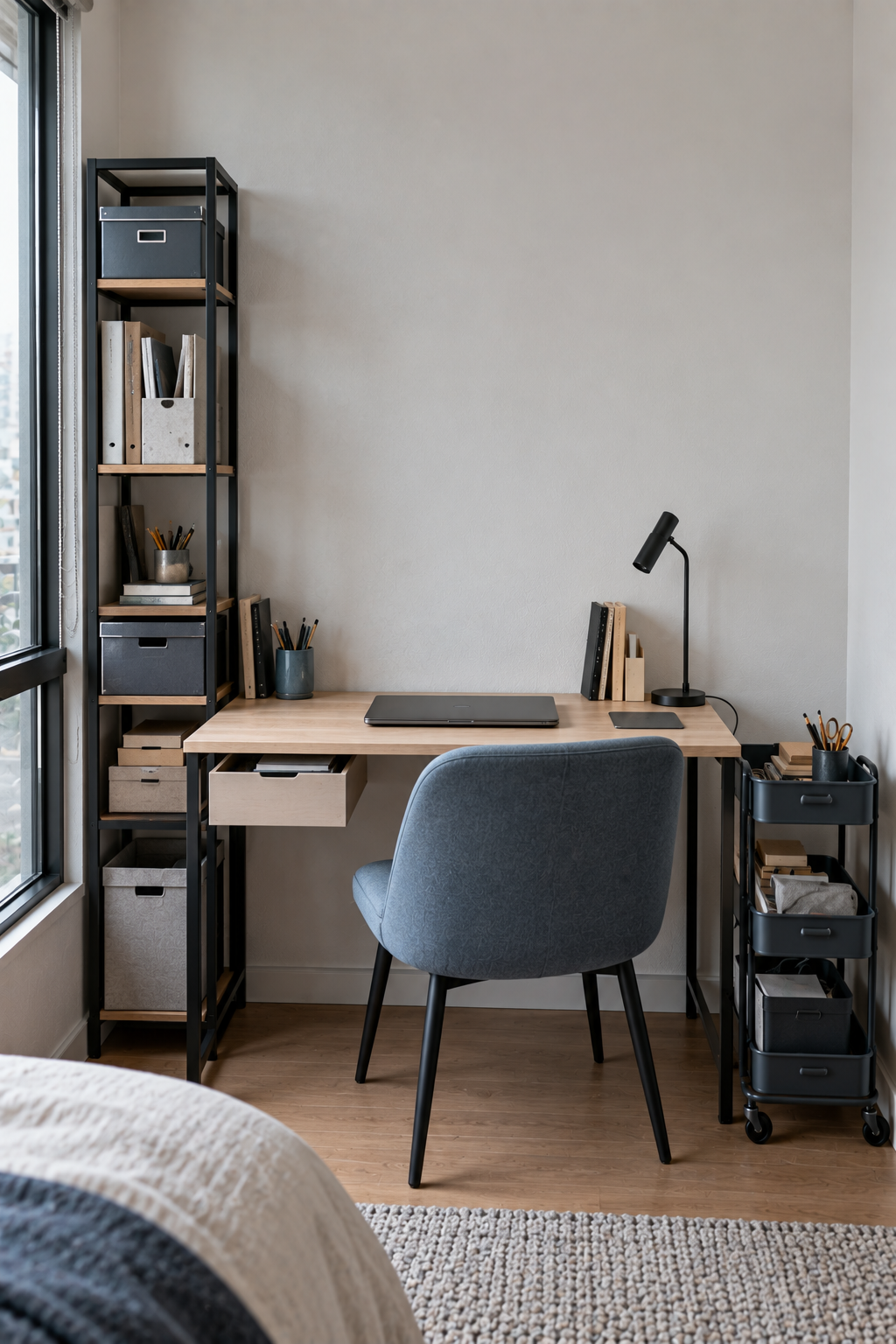
When a small desk runs out of room, most people add containers to the one surface that is already crowded. A better question is directional: can this item move up, down, or sideways? Each direction solves a different kind of storage problem and has a different cost in reach, legroom, and visual weight.
- Move lightweight, visible references up.
- Move compact, low-frequency supplies down.
- Move mobile or shared items sideways.
Up: use the wall carefully
Wall space suits calendars, headphones, lightweight tools, and shallow shelves. Keep frequently handled items between seated eye level and a comfortable standing reach. Do not hang heavy objects above people or equipment without appropriate hardware and wall knowledge. Renters can use a freestanding pegboard or shelf riser when drilling is not allowed.
Down: protect your legroom
An under-desk drawer or slim tray can hold small supplies without taking surface area. Before mounting anything, sit naturally and move your knees through the full range you use. Storage that forces your body sideways is not a space-saving win. Keep heavier supplies low but away from feet and chair wheels.
Sideways: create a support station
A narrow cart, filing box, or small cabinet beside the desk is ideal for items that move between tasks. It can also serve a shared room because the whole station rolls or closes away. Match its top height to the job: level with the desk for temporary overflow, lower for storage you want visually quieter.
Assign by frequency
Daily tools should require one movement. Weekly supplies may require two. Seasonal or backup items can be stored elsewhere. If you repeatedly stand, open, and reach for a daily object, its assigned direction is probably wrong.
Limit the visual inventory
Open storage makes everything easy to see—and makes every item part of the room's visual field. Reserve open systems for a small group of objects you use often. Put mixed packaging, cables, and refills in an opaque bin or drawer so the workspace can rest.
Make one direction earn its place
Add only one storage layer at a time and use it for a week. If it does not free meaningful surface area or reduce setup time, remove it. Small rooms punish speculative storage because every organizer also becomes an object that needs space.
Gather everything currently on the back third of your desk. Mark each item U, D, or S for up, down, or sideways, then relocate only the five that create the biggest clear area.