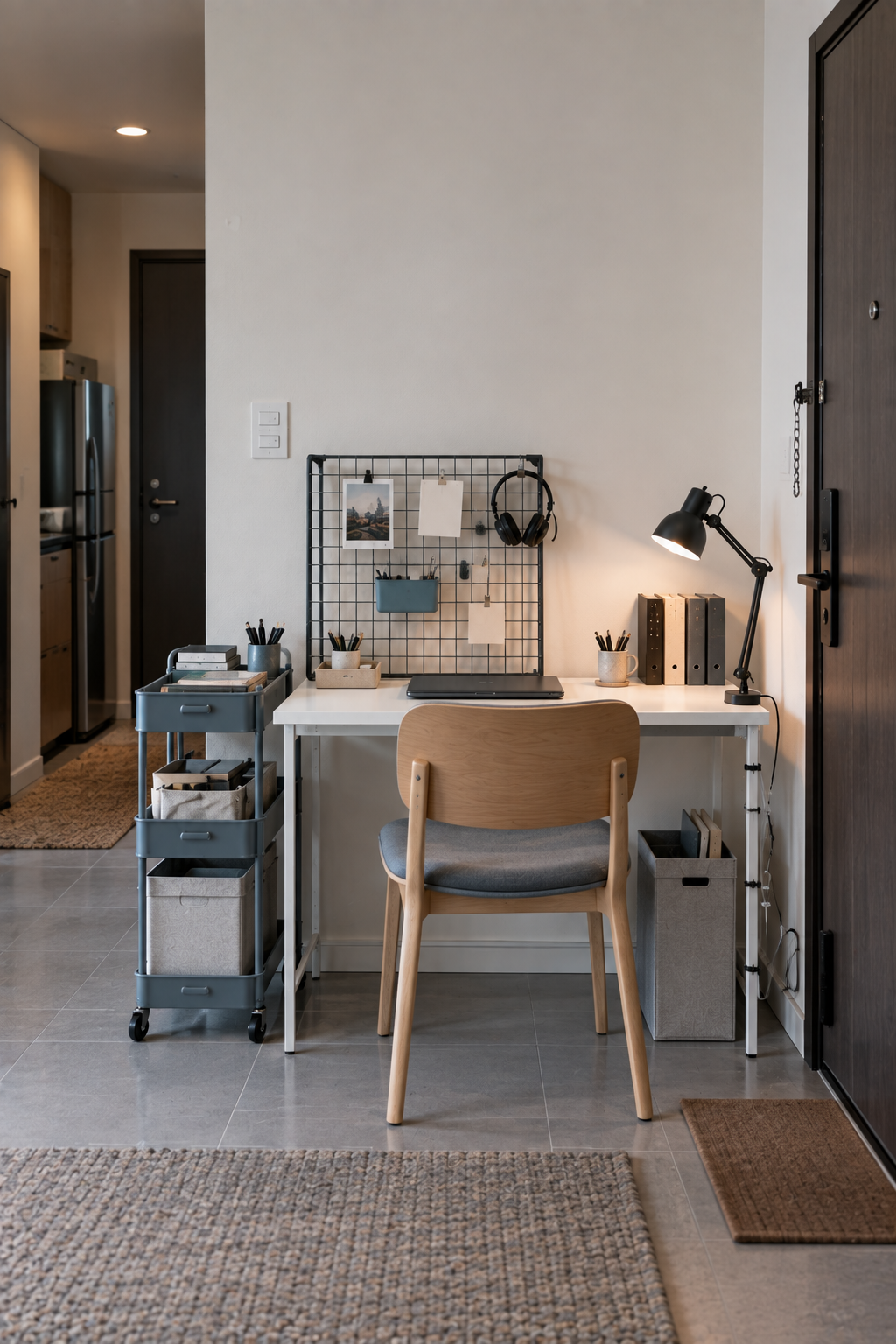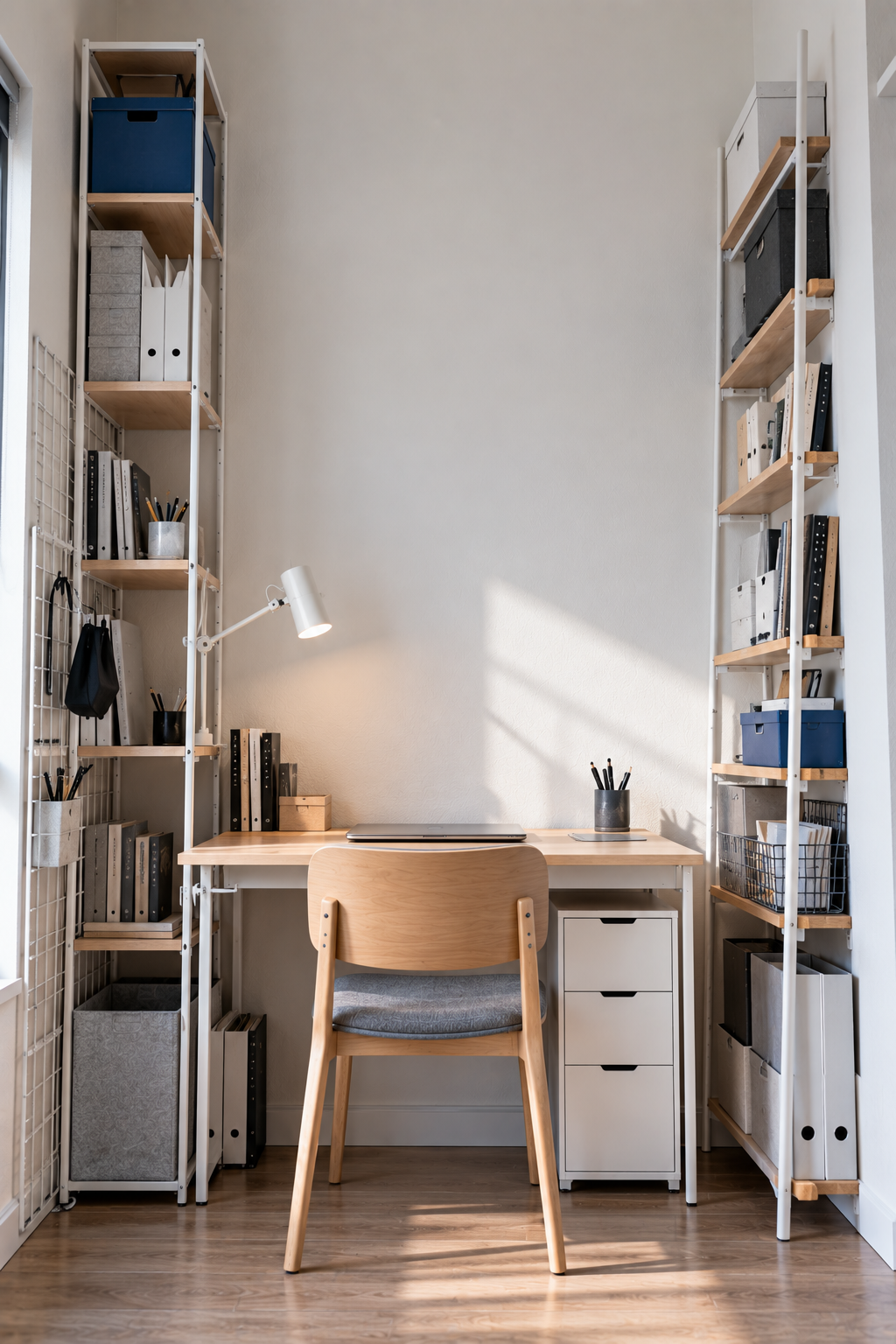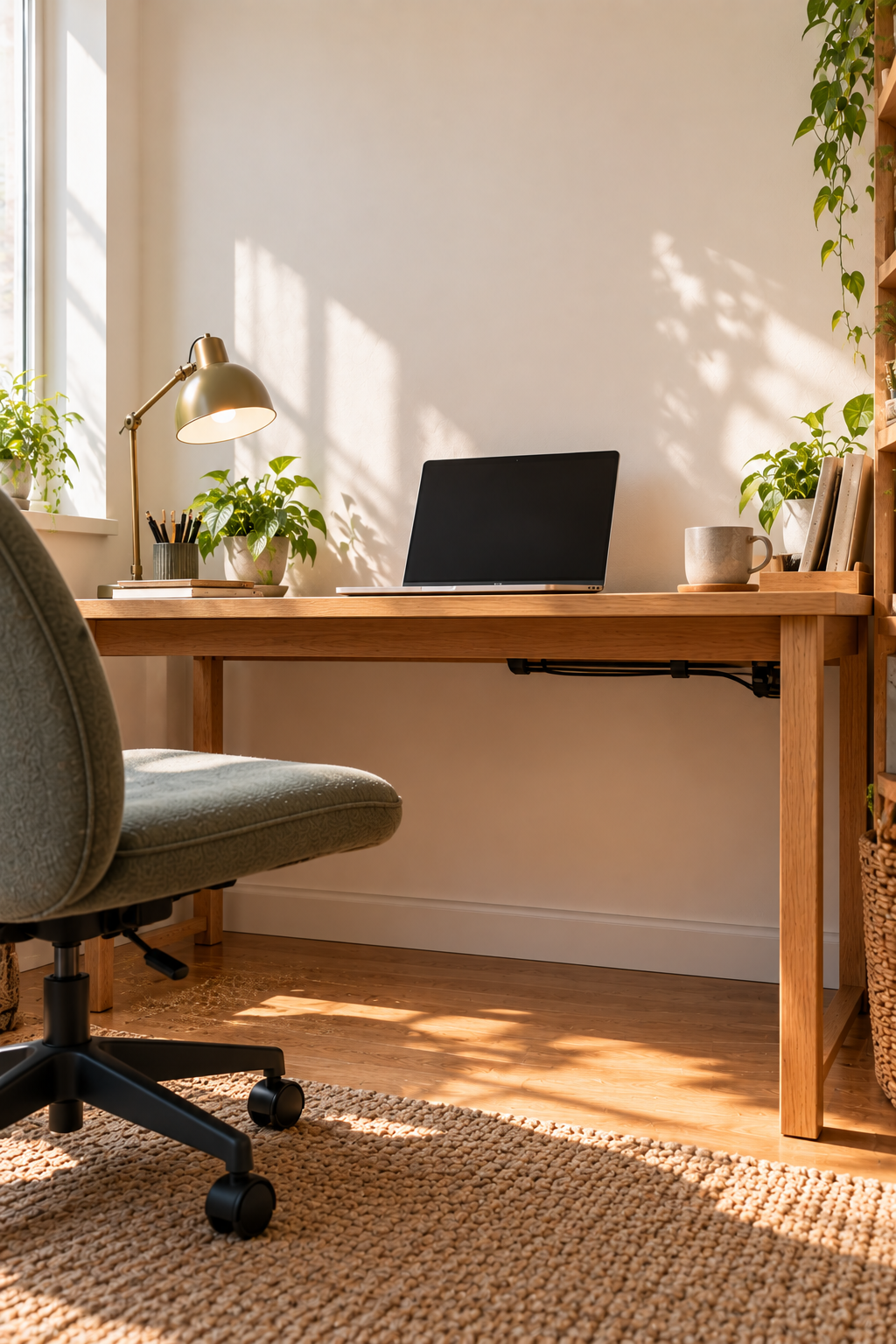
The space below a desk looks available when nobody is sitting there. Once a chair, knees, feet, and cables are added, much of that volume is already working. Good under-desk organization uses the true leftover space without making the seated position cramped or unsafe.
- Map body and chair movement before mounting anything.
- Keep the center clear and use the back or outer sides.
- Avoid storing loose objects where feet or wheels can catch them.
Measure while seated
Sit in your normal posture and mark where your knees rise, where your feet rest, and how far the chair moves during entry and exit. Repeat with the chair slightly higher and lower. The safe storage zone begins outside those movements, not at the visual edge of the furniture.
Protect the center lane
The middle area should usually remain open. Place a small drawer, computer mount, or cable tray toward the back or an outer side, provided the equipment guidance allows it. A centered obstruction often causes unconscious twisting, which becomes more annoying than the clutter it solved.
Separate equipment from supplies
Power and computer equipment need ventilation, stable support, and clear cable paths. Paper, stationery, and personal items belong in a different container. Mixing them makes inspection difficult and encourages supplies to press against warm adapters or block airflow.
Plan for the chair
Roll the chair through the full range used to sit down, stand up, and turn. Look for cords, bags, and low boxes that a caster can catch. If the floor must hold a small item, keep it against a wall or desk leg and give it a consistent footprint.
Make maintenance possible
Anything mounted under the desk should remain reachable with ordinary tools. Leave room to release a cable tie, remove a power adapter, or clean dust. A perfectly hidden device that requires dismantling the desk will not be maintained.
Test before mounting
Use removable tape and a cardboard mock-up to represent the drawer or tray for a day. Sit, work, and stand several times. This catches knee collisions and awkward access before holes or strong adhesive make the decision difficult to reverse.
Draw a simple top-down map of the desk underside. Shade the knee area, foot area, chair path, and cable path. Only the unshaded zones are candidates for storage.