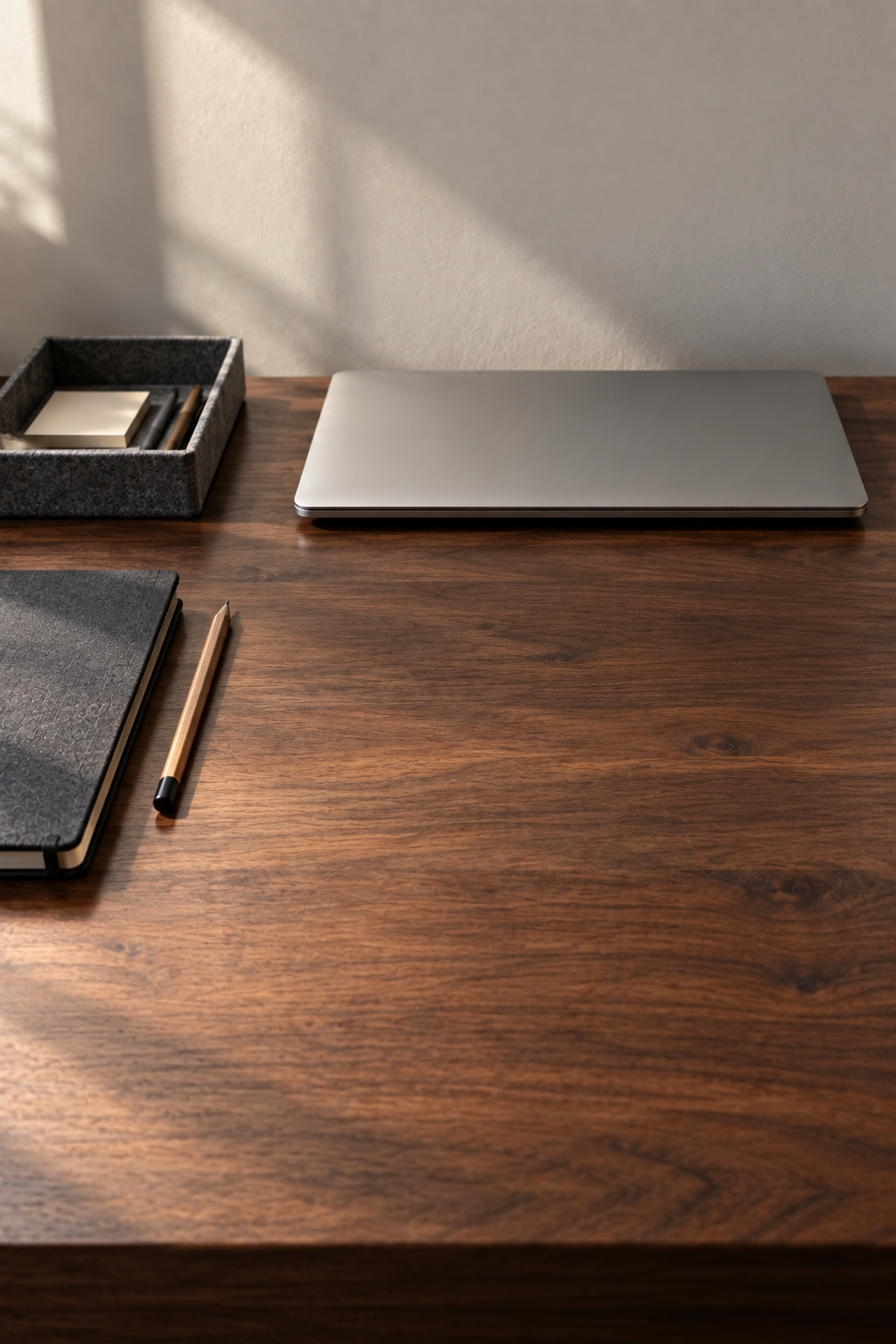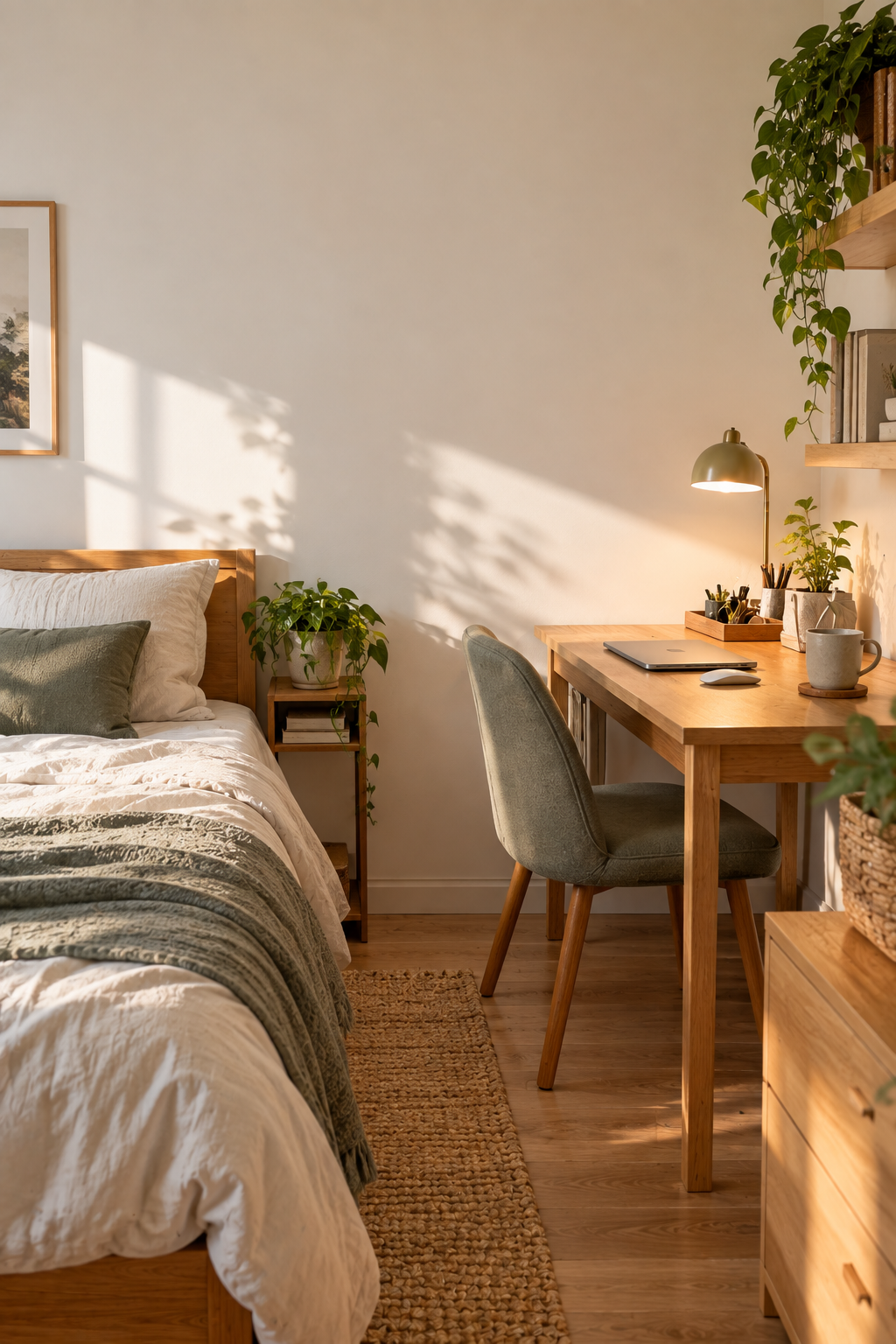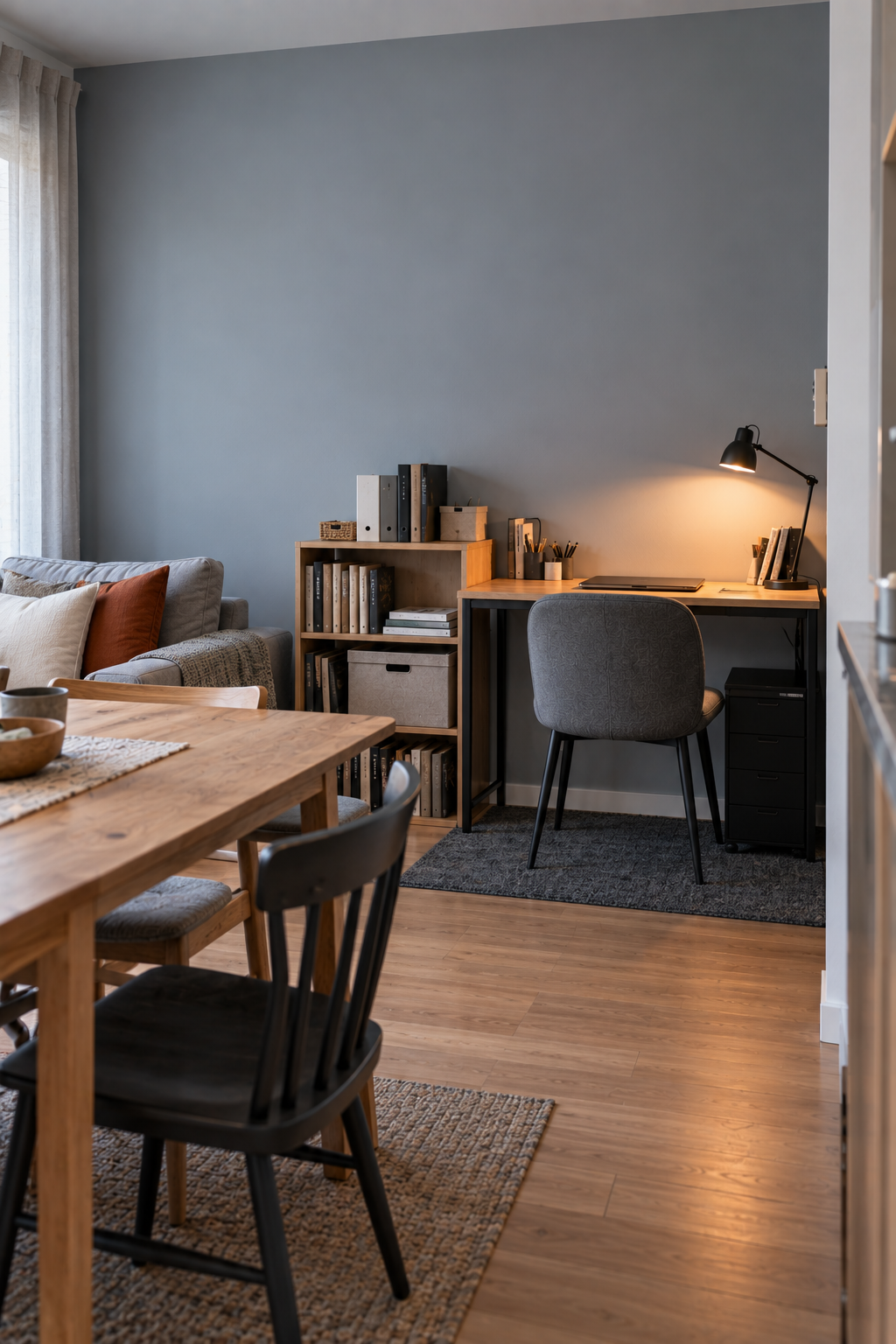
A workspace in a shared room affects everyone who sees and moves around it. Calm does not require a perfectly matched aesthetic. It comes from containing the work zone, reducing unfinished visual signals, and making the room easy to reset for its other purpose.
- Define the desk's footprint, including the chair and cable path.
- Repeat one material or color already present in the room.
- Close the workspace at the end of each session.
Draw the true boundary
The workspace is larger than the desktop. Include the chair when pulled out, a route to the seat, and any cabinet or cart that opens. Use a rug edge, wall line, or furniture alignment to make this footprint legible without adding a physical divider.
Borrow from the room
Repeat one existing finish—dark metal, pale wood, warm white, or another restrained element—so the desk feels related to its surroundings. You do not need to match everything. One visual connection can make practical office equipment feel less like an intrusion.
Reduce the number of visible categories
A surface holding papers, electronics, stationery, personal items, packaging, and decor feels busier than one holding the same number of objects in two or three groups. Consolidate small tools in a drawer or opaque container. Keep only the current project visible.
Control the back view
In an open room, people may see the back of the monitor and the cable route more often than the front of the desk. Treat that view as part of the design. Route cables along a single line, remove unused leads, and avoid stacking loose items behind the screen.
Use portable work layers
A shallow tray or document wallet can hold the active project and move as one unit when the room changes function. This is especially useful on dining tables or consoles. The goal is a quick transition, not a permanent display of office supplies.
Agree on a reset point
In shared households, define when the chair is tucked away, calls use headphones, or the work surface closes. A predictable routine protects both focus and shared use better than relying on everyone to interpret clutter the same way.
Photograph the workspace from the room's main seating area. Remove or contain the first three objects that read as unfinished work from that view.